


The state of the recruiter experience: What TA and ops leaders are seeing in 2026
Jump Links placeholder, DO NOT REMOVE
Key highlights
- Nearly half of recruiters describe their experience as reactive and overloaded and most spend at least 50% of their time on non-strategic work
- Poor tool integration is the top technology frustration, pushing recruiters out of their ATS to get core work done
- Rec ops is emerging as the connective owner of the recruiter experience, though panelists agreed ownership works best as a shared effort
- AI earns trust through enablement and explainability, not speed alone; humans keep the final decision on every candidate
Ask anyone why they got into recruiting and you will not hear “to schedule interviews.” You will hear something about people. About the match. About the moment a candidate lands somewhere they belong.
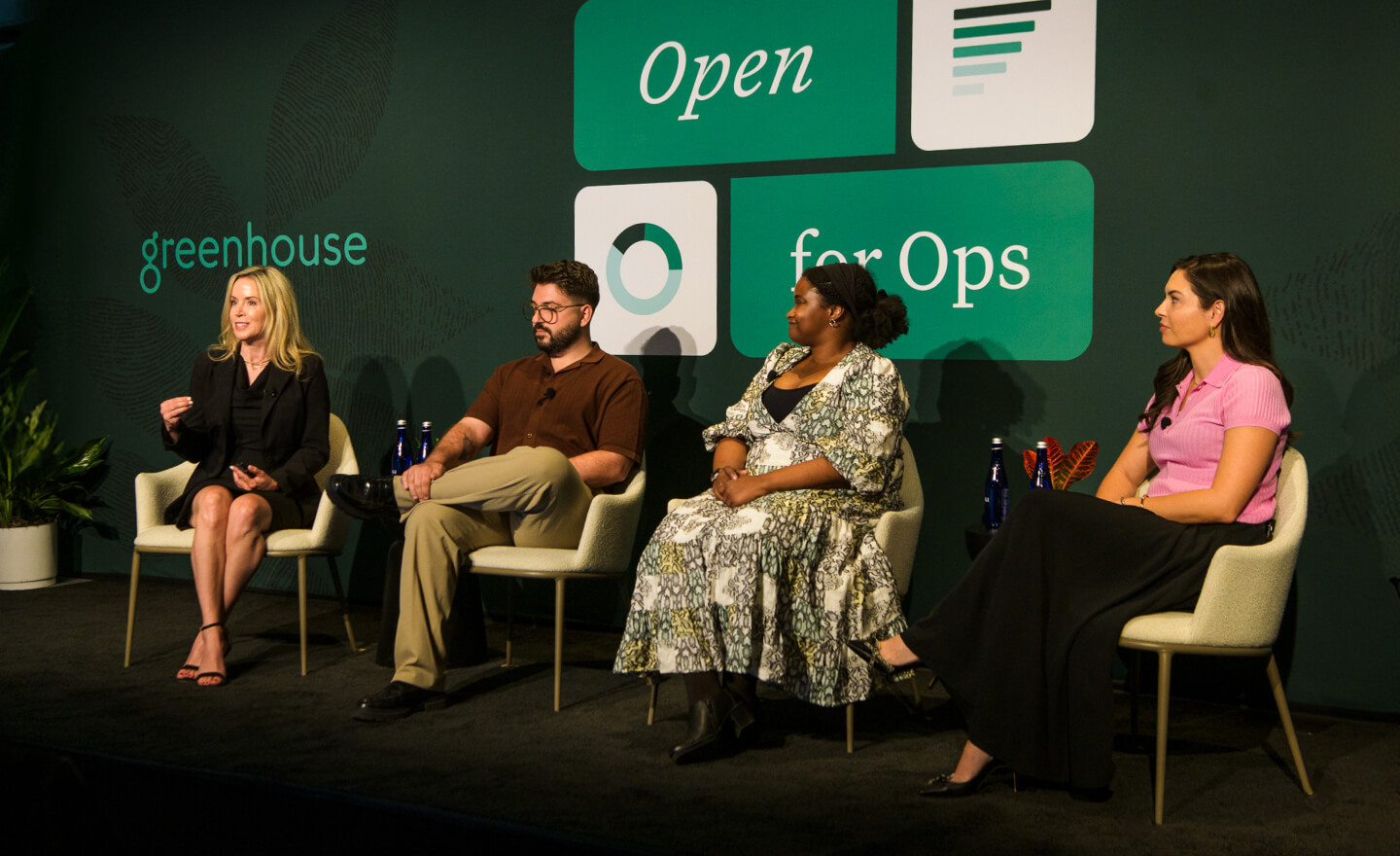
So it says a lot that nearly half of recruiters now describe their day as reactive and overloaded, and more than half spend at least 50% of their time on work that has nothing to do with why they signed up. Those numbers come from new Aptitude Research findings on the state of the recruiter experience, and they set the stage for a candid panel at a recent Open for Ops event, led by Madeline Laurano of Aptitude Research. She was joined by three practitioners living these numbers daily: Joey Quaranti, who runs talent strategy and ops at Carta; Dom Prieto, TA ops at Asana; and Kelsey Biggs, who leads global talent acquisition at Gong. What followed was less a data readout and more an honest reckoning with how the job has changed.
Why recruiters feel overloaded and reactive
When Madeline shared that 47% of recruiters call their experience reactive and overloaded, nobody on stage flinched. Kelsey put words to why. The days of stable annual headcount plans and consistent tooling are gone. Priorities shift every quarter, tools change, the market moves. Reactivity, she argued, has quietly become a skill set leaders and recruiters alike have had to build just to keep pace.
The problem is meaningless work, not just volume
Her sharper point was about that second stat, the time spent on non-strategic work. Her recruiters, she said, do not feel overloaded so much as they feel the work is not meaningful: constantly leaving the ATS, bouncing between disconnected tools, doing the administrative motion instead of the human one. That is where the frustration lives.
If you ask anyone why they became a recruiter, they’re not going to say to schedule interviews or do administrative work. So can we design our experiences around the workflow?
– Madeline Laurano, Aptitude Research
Dom, from the ops side, framed it as a collaboration problem as much as a workload one. Recruiting touches every department, and being good at your job is not enough when legal, marketing and sales all have different priorities and none are automatically bought into yours. A big part of the role, she noted, is translation and alignment work that never shows up in a job description.
Is your recruiting tech the problem, or your process?
The Aptitude Research report found that 61% of recruiters name poor integration as their biggest technology frustration, and 57% leave their ATS just to complete sourcing. When Madeline asked whether the challenge was really the tools or the process underneath, Dom gave an incredibly useful answer.
Her approach comes from a behavioral science background, and it is unusually disciplined. At Asana she keeps a standing panel of recruiters as a test group, an open channel for what is working and what is not. Those conversations, she explained, are where you find out whether you have a tool problem or a people problem. Maybe the process looks great on paper but people get bored halfway through and abandon it. Maybe the tool is genuinely good but wrong for this team. Her job, as she sees it, is to be honest enough to say “this is great, and it is not great for us.”
Build vs buy: How to evaluate recruiting tools
Kelsey brought the TA leader’s version of the same tension. Gong has historically built more in house and kept a deliberately lean stack, which means a constant push and pull between adding tools to solve specific problems and consolidating to reduce the sprawl.
Neither path is free. Joey reframed it as build versus buy, and then the harder question underneath: even if you can build, should you? At Carta, the filter is not whether a tool is impressive. It is whether it moves company goals and meets the talent team where they already work. His team routes support requests through Slack straight into Jira on the back end, so recruiters never have to leave the tools they are comfortable in.
Who owns the recruiter experience?
One of the more revealing moments came when Madeline asked who actually owns the recruiter experience. The research showed answers scattered across HR, IT and vendors, with no clear consensus.
Kelsey described a “sandwich” model: as head of TA she owns the philosophy and foundation at the top, recruiters own the day-to-day reality at the bottom and rec ops sits in the middle as the connective tissue that grows more critical by the day.
Why rec ops should own the recruiter experience
In her view, rec ops has quietly become the AI strategy owner, the build-versus-buy decision maker, and increasingly the true owner of the experience itself. She called it the future of TA leadership.
Recruitment operations has always been critical, but it’s so much more heightened now. You are the AI strategy leader. You are the one deciding if we’re building versus buying. I think rec ops is the true owner at the end of the day.
– Kelsey Biggs, Global Talent Acquisition, Gong
Dom agreed, then added that ownership has to stay collaborative. Rec ops has the bird’s-eye view of the stack and is best positioned to design the experience proactively, but TA managers have the sharpest sense of what is actually hurting their teams.
She pointed to Asana, where engineering TA leaders came to her team about inconsistent data and a joint effort to rebuild pipelines followed. Put the whole thing on one stakeholder, she warned, and you miss the opportunity entirely.
How to use AI in recruiting without losing trust
The panel was clear-eyed about AI, and refreshingly unhyped. Efficiency matters when your workload has doubled. But the more interesting shift is toward AI as an enabler, and that is where trust has to be earned rather than assumed.
Dom made the sharpest point. Anchoring only on speed, she said, does you a disservice with something this powerful. Her condition for trust is that her team understands when the tool is wrong. AI still hallucinates, and taking an output at face value can make things worse.
So Asana invests in enablement: weekly sessions, a hackathon and shared examples like a job description audit bot that pulls postings from Greenhouse and checks them against creative standards. Recruiters work back and forth with that bot and can see exactly how it is built, so they can judge the output themselves.
If the only thing that you’re anchoring on is speed, you’re doing yourself a disservice. To trust the AI that we implement, I need my team to feel comfortable understanding when it’s wrong.
– Dom Prieto, TA Ops, Asana
Let AI handle admin so recruiters can connect
Joey described the ops role as pulling back the curtain: giving recruiting teams access to the back-end logic ops has always worked in, then helping them use it well. The goal at Carta is not to invent new admin tasks disguised as innovation. It is to hand recruiters the thing that actually differentiates them, the capacity to connect with people. Automate the work nobody wanted, and let the human part of the job breathe.
The most important value a recruiter brings is their ability to connect with people. As we introduce all these AI capabilities, we want to make sure the candidate still feels like there’s a person taking care of them.
– Joey Quaranti, Talent Strategy & Ops, Carta
This maps to how the Aptitude Research report frames the future state. AI belongs embedded in the workflow to reduce manual coordination and surface structured signal, while people always make the final call on candidates. Speed without verification is the risk. Structured, defensible, human-in-the-loop hiring is the goal.
Kelsey added a closing observation worth sitting with: a divide is already opening between recruiters who act as consultants and business advisers, hungry for what AI can do, and capable executors sitting back on their heels.
The through-line from every panelist was the same. This is new for everyone, no one is the expert yet, and the leaders getting it right are building confidence rather than demanding mastery. As Joey put it, you are not going to get fired for building something that did not work. You fix it together.
Actionable next steps for TA and ops teams
If you’re in talent acquisition:
- Rebuild the feedback loops between you and your recruiters. Kelsey’s own takeaway from the day was that being a few layers removed had left her loops weaker than she assumed, and everything downstream depends on hearing the day-to-day clearly.
- Separate “overloaded” from “unfulfilling.” If it's a capacity problem, redesign the workflow. If it's a meaning problem, restore the human parts of the job you've automated or stripped away. An audit of where recruiters' time actually goes will show you which problem you're dealing with.
- Judge new investments against company goals, not feature lists, and watch the divide between consultative and execution-focused recruiters so you can decide deliberately how to enable people across it.
If you’re in recruiting operations:
- Claim the ownership already landing on you, and pair it with a standing recruiter test group so your design decisions stay grounded in what people actually experience.
- Diagnose tool versus process before you buy. Reject a good tool that is wrong for your team, and meet recruiters in the systems they already use rather than adding another login.
- Point AI at the work recruiters dislike first, insist on explainability so they can judge when the output is wrong and invest in enablement as seriously as the tools themselves.
- Define your builder and governance framework before AI creation spreads across the team, and stay proactively helpful; a quick unprompted assist is what makes stakeholders come to you early, before something breaks at the offer stage.
What a better recruiter experience looks like
The recruiter experience has not kept pace with what recruiters are being asked to do. The panel made that plain, and the data behind it is more striking still, from the widening gap between recruiters and leadership to the breakdown of where recruiter time should go and what AI should genuinely handle.
The full Aptitude Research report goes deeper into the numbers, the structural fixes and what a redesigned recruiter experience actually looks like.
FAQs
What is the recruiter experience?

The recruiter experience describes how recruiters actually work day to day: the processes, tools and relationships that shape whether their time goes toward meaningful, strategic work or reactive administrative tasks.
Why do so many recruiters feel overloaded?
Workloads have grown sharply while headcount has not. Recruiters juggle more systems, higher volume and shifting quarterly priorities, and much of their time is absorbed by coordination and manual work rather than the human, strategic parts of the job.
Who owns the recruiter experience inside an organization?
There is no single answer, but panelists pointed to recruiting operations as the increasingly central owner, working in close partnership with TA leaders and the recruiters living the day-to-day.
How should AI be used in recruiting?
Panelists favored using AI to handle manual coordination and surface structured signal, while keeping humans firmly in charge of hiring decisions. Trust comes from explainability and enablement, not from optimizing for speed.